

Phase Change
Excerpt from Stephen Zimmerer’s review originally published in The Brooklyn Rail:
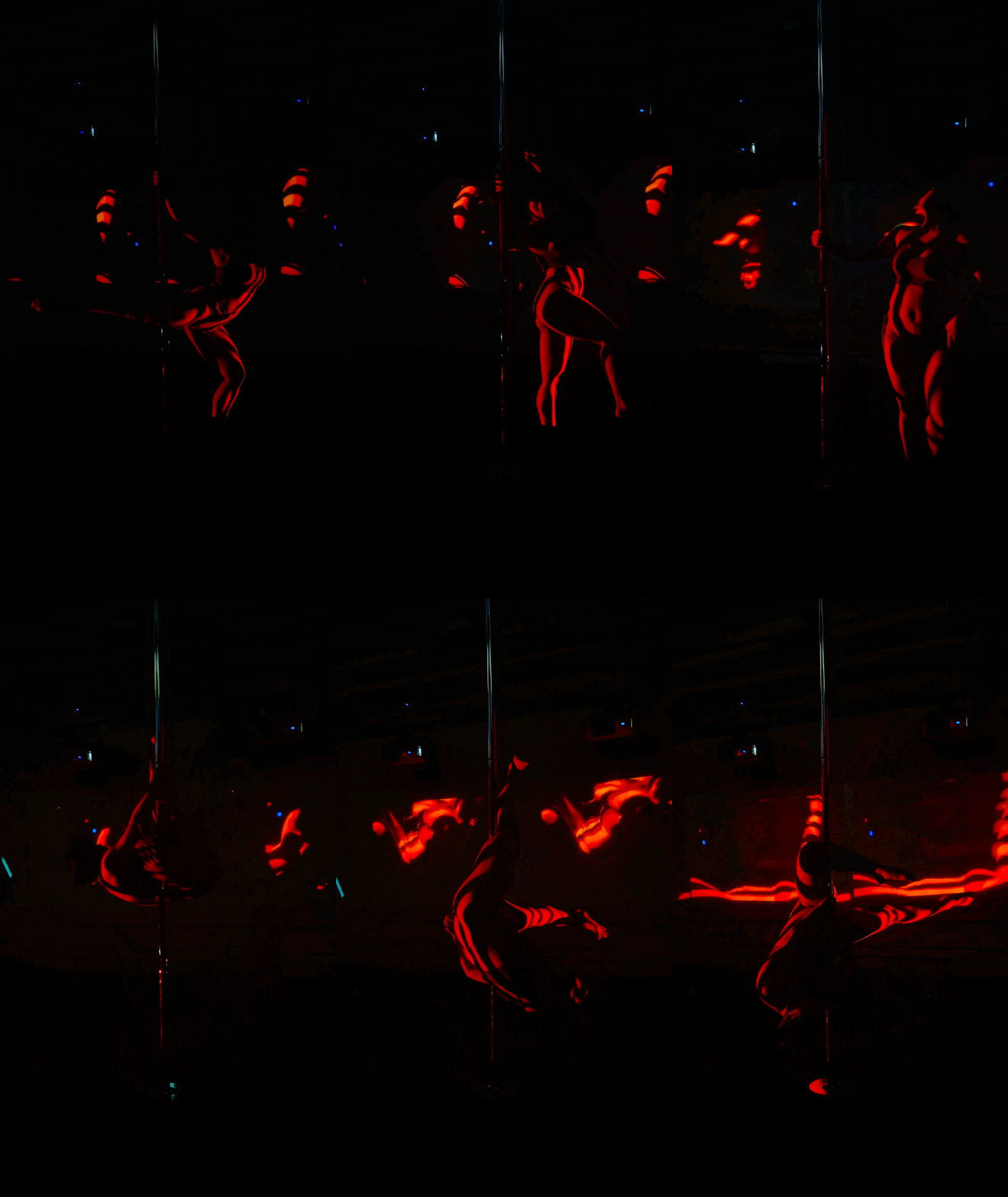
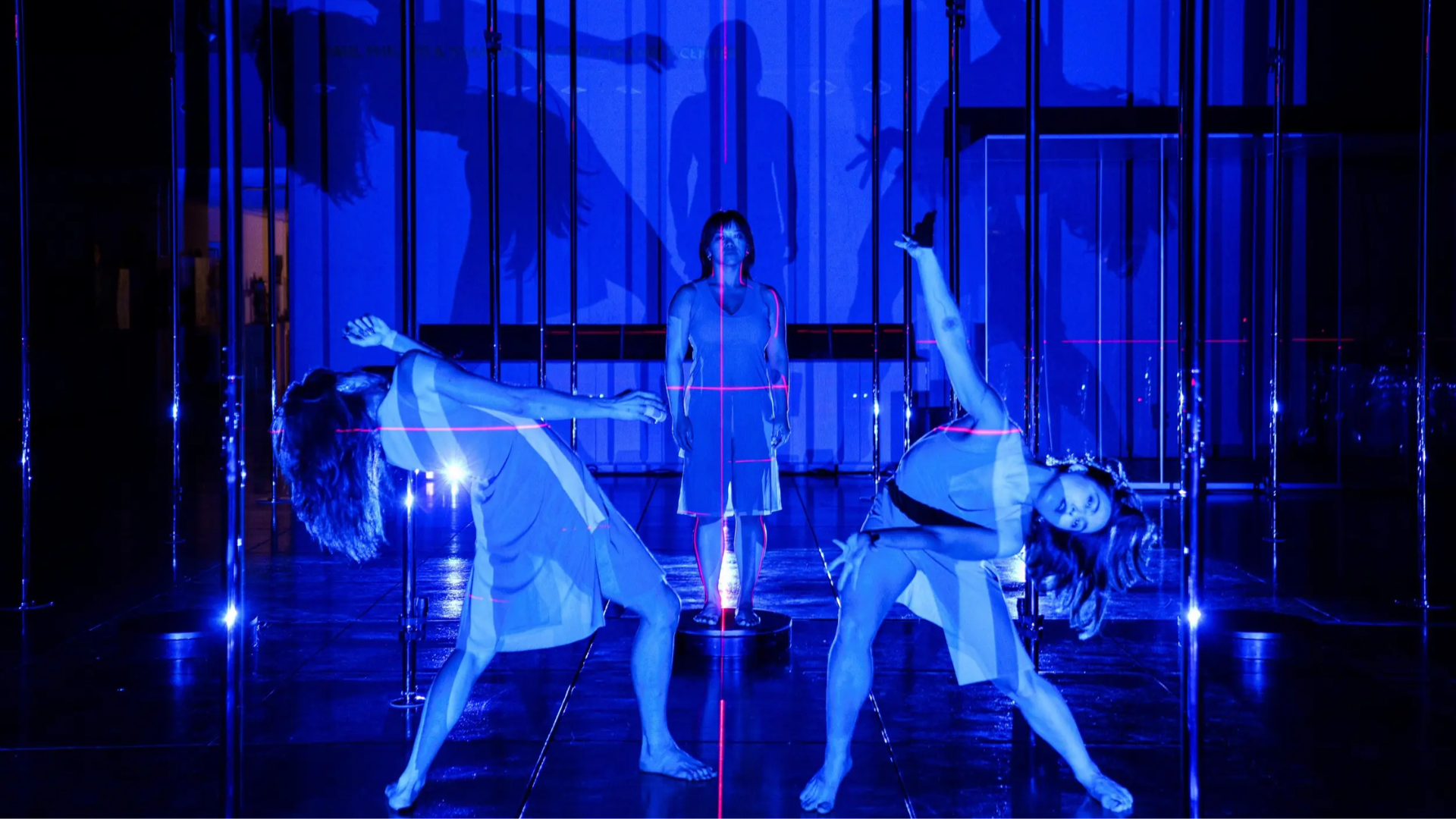
In Relapse, the penultimate number of Erin Cuevas’s Ouroboros, three dancers appear suspended within a field of projected digital images. Striped vertical lines mark each body. As they begin to glide up and down the thirty-six dancing poles installed in the Everson Museum of Art’s lower-level gallery, the lines contort, producing languid contour maps across the surface of each warped figure. Linework drifts past the figures and gallery walls and spills onto the ceiling above. For several moments, the waffle slab appears as though it is beginning to melt.
Over the first weekend of November in Syracuse, the I.M. Pei-designed gallery has become a living media apparatus. The audience sits in two shallow rows of black folding chairs lining both sides of the main axis. At the two opposing walls capping its end, three projectors each map strobing light from their lens onto the wall opposite. Between their gaze, they capture the figures of three dancers within an evenly spaced field of thirty-six dancing poles, each spanning comfortably from floor to ceiling as though providing necessary columnar support. This evening’s event is not a slick studio production but a resourcefully assembled operation by a former architectural fellow at Syracuse University.